


 Menu
 Back
Pool Types & Systems
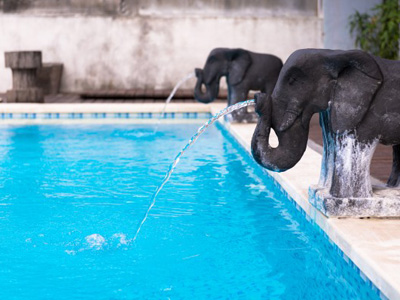 A pool is defined by two choices: the structure that holds the water and the system that keeps the water clean. The structure sets the shape, the surface and how long the build takes. The water system sets how often you test, treat and top up. Nolascapes Pool & Outdoors LLC builds fiberglass, vinyl, concrete and gunite pools in New Orleans and the surrounding area, and this page compares them briefly. Each type links to a page with the full detail.
- Quickest to install: fiberglass pools
- Lowest starting cost: vinyl pools
- Most design freedom: concrete and gunite pools
- Smallest footprint: cocktail pools
Pool Structure Types
 Fiberglass Pools
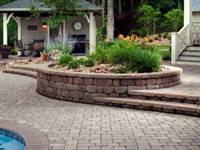
A fiberglass pool is a shell made in a factory and set into the excavation in one piece. The shapes are fixed, the surface is smooth and it is the quickest of the four to install. The trade-off is choice: you pick from the available shell designs instead of drawing your own.
 Vinyl Pools
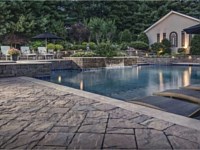
A vinyl pool has wall panels set in the ground and a custom-cut liner fitted inside. The size and shape can be adjusted more freely than a shell, and the installation cost is lower than for concrete. The liner is the part that wears and is replaced over the years.
 Concrete Pools
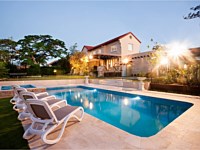
Concrete pools are formed on site around a steel frame, so any shape, depth and feature can be built in. They take the longest to build and allow the widest choice of finishes, from plaster to tile. They can also be designed around the slope, the trees or the patio already on the property.
 Gunite Pools
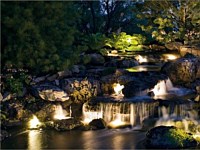
Gunite is the sprayed form of concrete that we use for most custom pools. The shell is applied in layers over the steel and shaped by hand, which allows steep walls, steps, benches and built-in spas. Because the crew works the material by hand, the result suits shapes that a mold cannot produce.
 Cocktail Pools
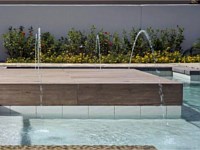
Cocktail pools are small, usually under 400 square feet, and sized for sitting, cooling off and entertaining rather than for laps. They suit compact city lots, and many include a bench and jets.
Pool Water Systems
 Chlorine Systems
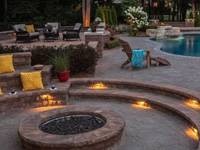
Chlorine is the standard sanitizer and works with every pool structure. It is added as tablets, liquid or granules, and the upkeep is regular testing and balancing.
 Saltwater Systems
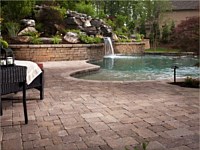
A saltwater pool uses a cell that makes chlorine from salt dissolved in the water, so you add salt instead of chlorine. The water feels softer, but the equipment costs more at the start and salt can affect some natural stone around the pool.
Local Conditions
Two conditions in New Orleans affect every pool type. The ground is soft and the water table is high, so each pool is designed with groundwater in mind, and a pool should not be drained without checking with your builder. Many yards, especially in Uptown and on the West Bank, are narrow, which limits the machinery that can reach the excavation and the way a shell or a liner can be delivered. We check both before recommending a type.Choosing Between Them
A few common pairings show how the choice works in practice:- A standard shape and a short schedule point to a fiberglass pool.
- A simple shape and a limited budget point to a vinyl pool.
- An unusual lot, a slope or heavy features point to a concrete or gunite pool.
- A very small yard points to a cocktail pool.