Fiberglass Pools
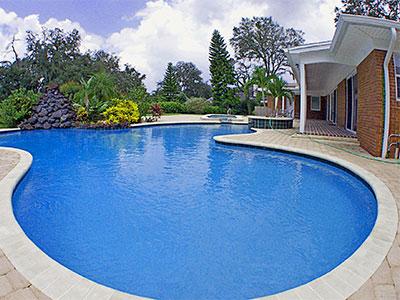
A fiberglass pool is a shell made in a factory from glass fibers and resin, finished with a gel coat and delivered to your property in one piece. The gel coat is non-porous, so algae has little to hold on to, and the smooth surface is gentle on bare feet and never needs replastering or repainting. Nolascapes Pool & Outdoors LLC is a full-service landscape and pool company, and we install fiberglass pools for residential and commercial clients in New Orleans and the surrounding area.
What the Shell Is Made Of
The shell is built up in layers of polymer-strengthened glass fiber, which gives it strength and a degree of flexibility. That flexibility lets it cope with changes in weather and with small movements in the ground, where a rigid shell can crack. The color is built into the gel coat, so there is no paint or plaster to peel or wear away. We supply units only from leading national manufacturers, so the quality of the shell is set at the factory before it reaches your yard. Because the surface is smooth and sealed, upkeep comes down to wiping, brushing and keeping the water balanced.
Shapes, Sizes and Built-In Features
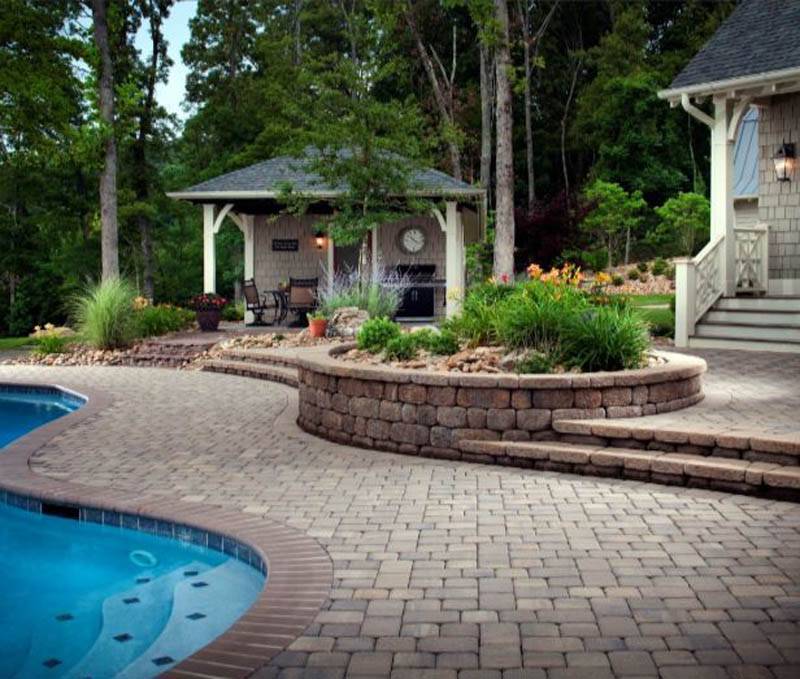
Shells come in set designs: rectangle, crescent, kidney, Roman and free-form, from small leisure pools to pools deep enough for diving. Steps, benches and tanning ledges are molded into the shell, and wall panels can be added. Because the shell is made in a mold, you choose a design rather than draw one, and the size is limited by what can be trucked to the property and lifted into the yard. A small yard can take a fiberglass
cocktail pool, which uses the same construction at a smaller size. If you want a shape no manufacturer offers,
a concrete pool is the better route.
Delivery and Access
The shell is delivered on a truck and set in place by crane, so before ordering we check the width of the gate, the overhead power lines and the route into the yard. Many yards in Uptown and on the West Bank are tight, and where a crane cannot reach the excavation, a
vinyl pool or a concrete pool may be the better choice. The ground is the other thing we check, and
Pool Installation explains why soil and groundwater matter in New Orleans.
How the Shell Is Set
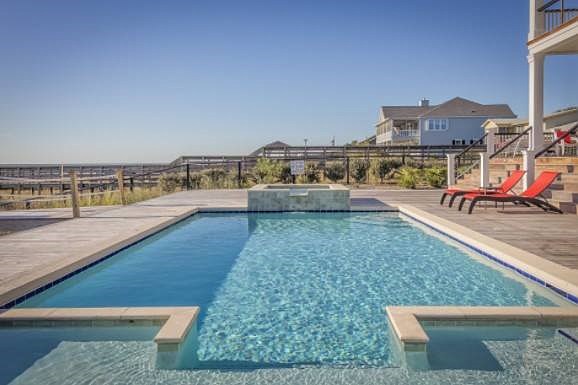
Once the excavation is cut to the size of the shell, the crew lays a compacted gravel base and levels it carefully, because the shell rests on that base and cannot be adjusted once it is down. The shell is lowered by crane and checked for level and position. The plumbing is connected with rigid PVC pipe and pressure tested to prevent leaks. The crew then backfills around the shell with clean stone in layers while the pool is filled with water, so that the pressure is balanced inside and out and the shell stays where it was set. Last, the cantilevered coping is formed and the concrete is poured around the edge, which finishes the pool and carries the deck up to it.
Cost and Upkeep Over the Years
The shell arrives finished, so there is no wait for a concrete shell to cure, and the installation saves weeks compared with a poured pool. A fiberglass pool can look expensive at the start and usually costs more than a vinyl pool, but it avoids liner replacement and the resurfacing that plaster needs, so repairs and renovation cost less over the years than for concrete. Its usability and appearance hold up for a long time.
Ask About a Fiberglass Shell
If a fiberglass pool is on your shortlist, call Nolascapes Pool & Outdoors LLC on
504-330-8479 or write to us through the
online form. Tell us the space you have, the access from the street and the features you want, and we will explain which shell shapes could fit, whether the delivery route works and how long the installation would take on your property.


 Menu
 Back

