Menu
 Back
Pool Installation
 Installation is the part of a pool project that happens in your yard: the equipment, the deliveries, the crews and the noise. How long it takes and what the yard looks like along the way depends mostly on the type of pool and on the ground it goes into. Nolascapes Pool & Outdoors LLC installs fiberglass, vinyl, concrete and gunite pools in New Orleans and the surrounding area. This page explains what happens on site, in the order it happens.
Before the Digging Starts
Before excavation begins, the crew checks the site against the approved layout. That includes:- Confirming the pool position and elevation
- Reviewing the access points for equipment
- Identifying underground utilities
- Assessing soil stability and drainage
Excavation and Your Yard
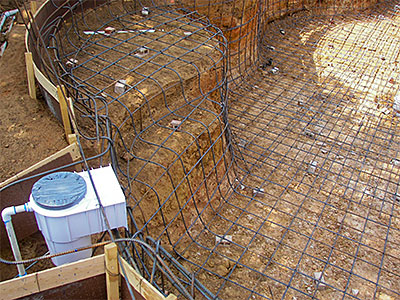
Heavy equipment digs the pool to the required depth and shape. The footprint is marked and excavated, the soil is hauled off or spread elsewhere on the property, and the base is graded and compacted, with adjustments for elevation and drainage. Expect an excavator, material deliveries and, for concrete work, trucks and pumps.Older neighborhoods in Uptown and on the West Bank often have narrow side yards and little room for machinery, so we choose smaller equipment and plan the dig and the delivery route in advance to limit damage to the lawn and fences. Tell us about anything in the access path, such as a gate width, a sprinkler line, a tree or a neighbor's fence. It is much easier to deal with before the machines arrive.
How Installation Differs by Pool Type
Once the hole is ready, the structure goes in, and this is where the pool types differ. The goal is always the same: a stable, properly supported pool that is level and aligned with the layout. Accuracy matters, because even small deviations affect water levels, deck alignment and long-term performance.Fiberglass pools are manufactured off site and arrive as a finished shell. The shell is set on a prepared base, leveled and backfilled. This is generally the shortest installation on site.
Vinyl pools are built on a framework of wall panels set in the excavation, with a custom-cut liner fitted inside. The shape is more flexible than fiberglass, and the on-site time falls between fiberglass and concrete.
Concrete and gunite pools are formed in place: a steel frame, a concrete or gunite shell that has to cure, and then tile, coping and the interior finish. They take the longest and allow any shape, and the phases are described in New Pool Construction Process. If you have not chosen a type yet, Pool Types and Systems compares them.
Drainage Connections and Backfill
The plumbing and electrical work is described under the construction process. What belongs to the installation crew is the placement: drainage connections and overflow management are set where needed, and every line is positioned so it can be reached for service later, with the trades working in the right order to keep the job moving.The area around the pool is then backfilled. The right material is placed and compacted in layers to stabilize the structure and lock it into place, and water is managed in moist soil. In New Orleans, proper backfilling does a lot to prevent later movement in saturated ground.
New Orleans Ground Conditions
The water table in much of New Orleans is high and the soil is soft. Groundwater can fill the excavation after rain, so the crew has to manage water while the hole is open. A pool shell sitting in saturated soil is also pushed upward by groundwater, which is why a pool should never be drained without checking with your builder first. The same applies years later: ask before emptying an in-ground pool for cleaning or repairs.Soft ground that is not compacted properly lets a pool settle unevenly, which shows up as cracked decking and water lines that no longer run level. An experienced crew plans for these conditions from the start.
How Long Installation Takes
On site, installation can take anywhere from a few weeks to a little over a month. Fiberglass is generally at the short end and concrete or gunite at the long end. The main variables are:- Rain, which can stop excavation and slow concrete work
- Soil, water and access conditions on your lot
- Inspections and the schedule of the trades involved